
Rules for Hating AI Art
Why You Might Not Hate AI Art in the Way You Think You Do

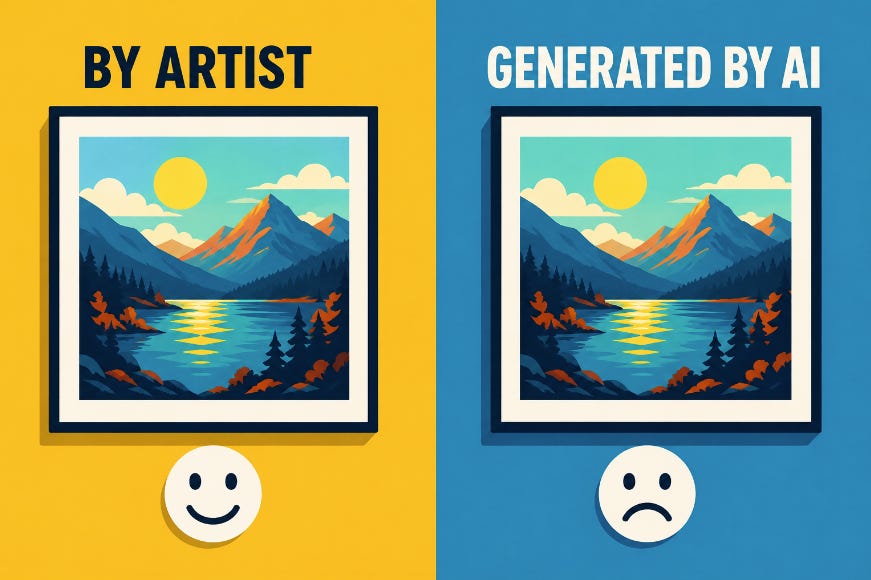
ChatGPT and I have a long-standing love-hate relationship when it comes to making artistic images. I’ve used it to create artwork for almost every Substack post. Sometimes it does a good job. Sometimes I ask for nanobots and it gives me Nazi U-boats.
That said, I’ve grown increasingly annoyed by the lack of critical thinking in parts of the anti-AI-art movement. To be sure, there are legitimate reasons to be irritated by the endless proliferation of AI-generated images taking over social media. However, many of the arguments people make against AI art simply don’t pass the sniff test.
I’m going to critique some of the broad complaints I’ve heard repeated over the past few months. Before beginning, let me be clear that I’m not going to debate whether AI art constitutes stealing, since I’ve already discussed that in another post. As the old adage goes, “Good artists copy, great artists steal,” so anyone who believes AI is theft would have to concede it’s a damn good artist.
Here are some of the common claims I’ve heard about AI art:
“All AI art is bad.”
Many people hold a blanket belief that all AI art is bad. For them, anything AI-generated is immediately disqualified from being artistic because it didn’t come directly from a human artist. However, that ignores the humans who built the technology in the first place.
Before generative AI took off, I was leading an AI innovation lab when we came across a website called This Person Does Not Exist. Each time you refreshed the page, it generated an image of a fictional person. Today, that seems almost quaint. At the time, everyone in the room was amazed. We were used to early generative systems that produced warped faces, extra eyes, melted teeth—the visual equivalent of a fever dream. Suddenly, here was a machine producing convincing human faces from nothing.
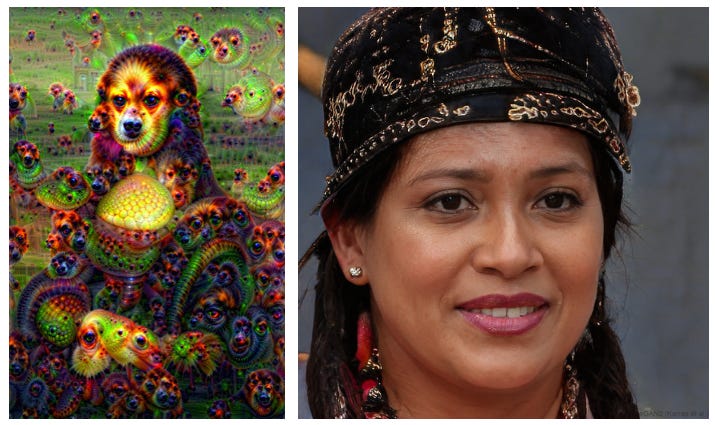
Technological achievement can be just as beautiful and inspiring as any photograph or painting. The researchers, programmers, and engineers who built this technology took a slab of silicon and metal and taught it to imagine. Should we relegate their achievements to being merely technology? There is undoubtedly something profoundly creative, even artistic, about building AI tools themselves.
Setting aside building the technology, even simply using AI to create can still be an artistic act. To be sure, AI doesn’t make someone an artist in the same way that a camera doesn't make someone a photographer, but both can be powerful artistic tools in the right hands.
For example, Refik Anadol uses AI to transform enormous datasets into immersive visual installations. Holly Herndon trained an AI on her own voice and uses it as a musical collaborator. Sougwen Chung paints alongside robots trained on their previous drawings. Before his passing this June, David Hockney experimented with AI to animate his paintings. These artists use AI to explore forms of creativity that would otherwise be impossible. In the process, they’re creating some of the most amazing, cutting-edge art in the world today.
“But I hate how AI art looks”
I was watching a live stream from one of my favorite YouTube channels when the host commented that he would never use AI on the channel. The comment section quickly filled with people saying they hated AI art and would never watch a channel that used it. All I could think was, “How would you know if they did?”
Early AI-generated images were easy to identify because they had certain tells. For example, having the wrong number of fingers was a dead giveaway. However, that was several years ago. Just as you wouldn’t judge an artist by the portfolio they made as a two-year-old, you shouldn’t judge AI by what it did in its infancy.
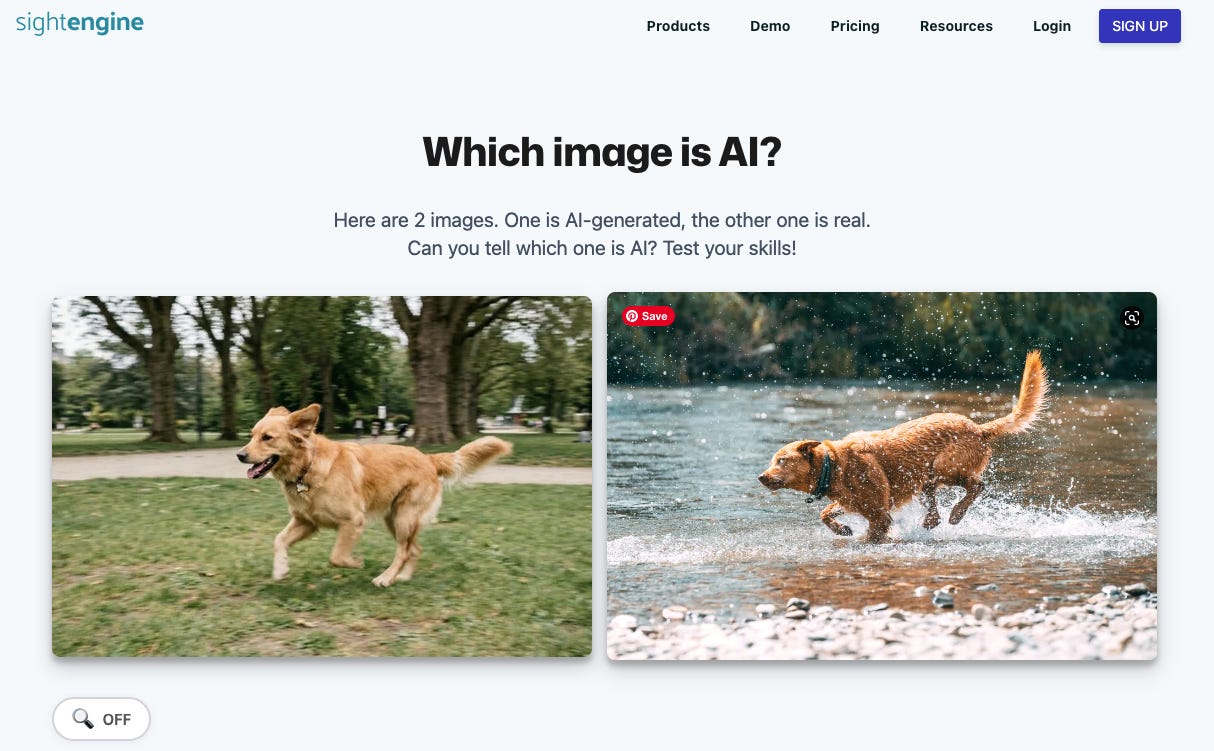
Today, AI art is a bit like plastic surgery. You only notice it when it’s obvious, which usually means it was poorly done. There are now entire games like “AI or Not” where you try to guess whether an image is real or AI-generated, and the answer is often far from obvious.
You might respond, “Fine. Then I hate AI art that looks like AI art.” That’s fair. Pinterest and other platforms are being overrun by images obviously generated by AI. They often look impressive at first glance, with enough detail to give the illusion that someone with technical skill created them. However, there is so much of this content—and so much of it looks exactly the same—that we know it was produced with a short prompt in about fifteen seconds.
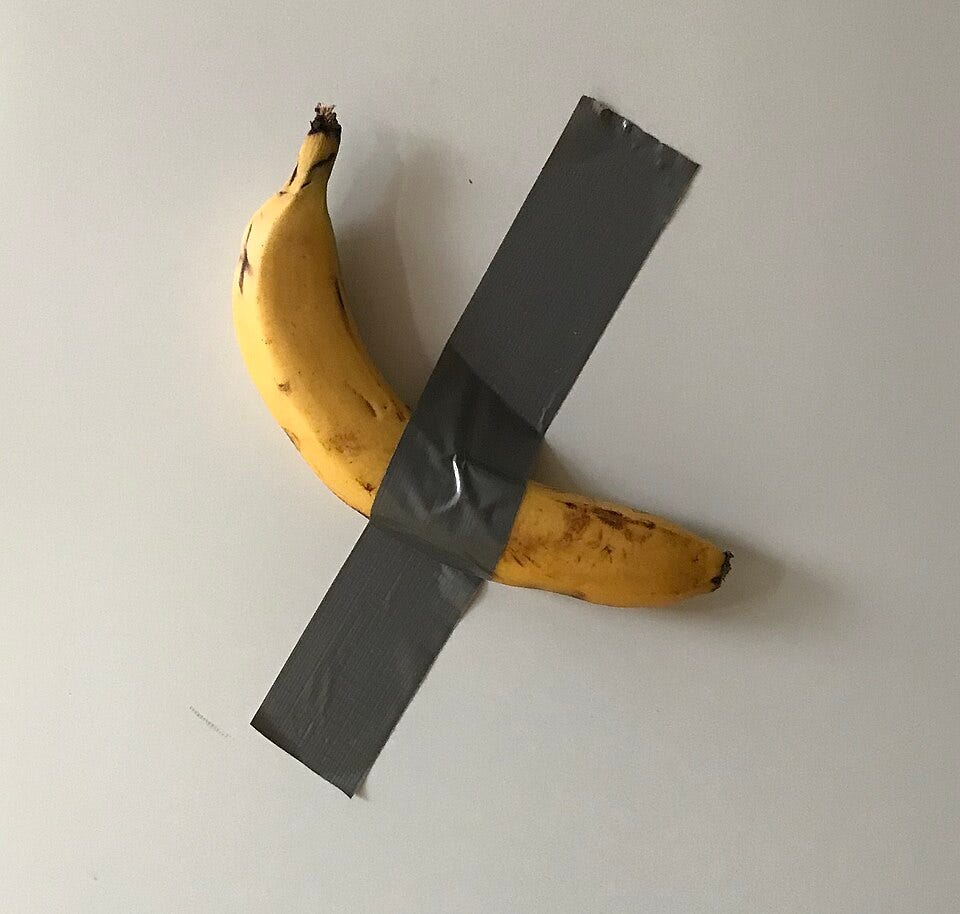
But there’s the crux of it: You don’t hate AI art. You hate lazy art. This is nothing new. People mocked Maurizio Cattelan’s viral piece Comedian, because it was just a banana duct-taped to a wall. This doesn’t mean walls, duct tape, or even bananas are inherently poor artistic media. It means that making art requires doing something inventive with the medium and demonstrating some degree of skill. AI is no different. We shouldn’t blame the medium for the laziness of some of the people using it.
“Artists Won’t Be Able to Make a Living”
When photography emerged in the 1800s, people worried painters would disappear. When phonographs arrived, they feared recorded music would make musicians obsolete. When motion pictures took off, some predicted the end of live performance. All of these art forms adapted and survived.
We can expect something similar to happen with AI. It may disrupt some artistic fields, but it will also create new ones. While portrait painters are no longer common, painting itself still thrives, and photography can be a lucrative career for anyone with good artistic sense. AI might change how artists make a living, but it will never eliminate the human desire to create or the patronage that comes with true artistry.
However, what AI unquestionably does is lower the cost of creating. For example, I briefly entertained the idea of entering the Future Vision XPRIZE competition.1 This competition challenges teams to create a film that presents a bold, optimistic, and scientifically grounded vision of the future. I’m certainly not a filmmaker. A few years ago, making even a rough trailer would have been out of the question. It would have required hiring artists, animators, voice actors, composers, editors, and a long list of people with talents I simply do not have. The only way it would be even remotely feasible is through the generous use of AI tools to supplement the skills I do have.
Note: my choice wasn’t between using AI or hiring Pixar. It was between using AI or doing nothing. Rather than replacing artists, AI tools make it so that everyday folks have more opportunity to create artistic works. This is true whether you’re talking about making films, video games, animations, electronic devices, or any of a host of creative projects I’ve previously described on this Substack.
Professional artists aren’t going away, but they’re about to be joined by entirely new creators who finally have the tools to turn ideas into reality. Millions of people who have stories to tell—but lack the budget, training, or team—will suddenly be able to create.
To be clear, this does not mean every artist’s job is safe. Some companies will inevitably use AI to cut costs, replacing experienced designers, illustrators, writers, musicians, et al. with cheaper, faster imitations. In many cases, they will get exactly what they pay for: generic work lacking a distinctive voice that customers will likely ignore. Again, this isn’t the fault of the tool, but of the people using it. Hollywood and music executives have been churning out bland, formulaic, corporate mediocrity for far longer than generative AI has been in existence.
“It’s hard to tell what’s real anymore.”
Even if you genuinely like how a piece of art looks or sounds, you may suddenly dislike it the moment you learn it was AI-generated. There is some nuance here, as Hank Green eloquently explains in his video What Is "Slop"? He uses the example of AI-generated dancers. Watching their incredible moves, you naturally assume it took years of training and dedication. Upon discovering the video was generated in minutes from a few lines of text, one’s reaction naturally becomes, “How dare they trick me!”
Green contrasts this with a funny, clearly AI-generated video of cats cooking pasta:
This video on Twitter had 25,000 likes and nobody was confused by whether it was real. They just thought it was funny that a cat flipped noodles onto its head. And that’s not really a joke that’s worth telling if you need to set up the scene in Blender, but it’s worth telling if you just are typing it into a prompt.
In that context, most folks don’t have a problem with AI, because it doesn’t feel like a betrayal of trust.
We want to reserve our admiration for things that genuinely deserve it, and our standards for what’s impressive are different in the physical world than they are in silicon. It’s natural to be annoyed when we feel deceived. Not being able to tell what’s real and what’s fake is a real issue in the age of AI and misinformation, but again it’s not an issue that’s specific to AI. Passing something off as reality when it’s not is called lying, and it was around long before AI.
Don't Blame the Brush for the Painting
In summary, we shouldn't hold a blanket hatred of AI or the art it helps create. AI is just a tool. Our focus should be on the human using it. When AI is used in the service of creativity rather than laziness or deception, we should celebrate the artist and the work they create, regardless of the tool they chose to make it with.
About the Author:
Aaron Santos is an innovator, author, and physicist. He’s written two books, How Many Licks? Or, How to Estimate Damn Near Anything and Ballparking: Practical Math for Impractical Sports Questions, which teach the art of estimation in fun and irreverent ways. He founded two nanoscience companies and is currently writing his third book, which explores the history, science, and future of nanotechnology. You can follow him on BlueSky.
At least I did before remembering that I’m up for tenure this year and have absolutely zero time, even with the help of AI assistants.
Really great article, by the way. I loved the points you made, and how you engaged with curiosity rather an absolutes.
Hi Aaron,
Very nicely argued. You might find the book "The Uncanny Muse" interesting - it goes into the history of new technologies enhancing art.
It's worth making a distinction between human artists using AI as part of their creative process and AI-generated art. I don't think many people object to the first. But if somebody just uses AI to generate something without any of their own input, is that even art? Doesn't art by its very nature require a human being (or conscious entity) trying to make a point about something? Current AI can't do that.
Mark